Dressed to Close: How Your Arrival Vehicle Shapes the Psychology of High-Stakes Negotiations
The boardroom is where deals are formalized. The lobby, the parking structure, the curb outside the building—that is where they begin.
Most executives spend weeks preparing for pivotal negotiations: rehearsing positions, modeling financial scenarios, consulting legal counsel. Yet relatively few consider the psychological groundwork laid in the minutes before they walk through the door. What you arrive in, how you arrive, and the composure you carry into the room are not incidental details. They are part of the negotiation itself.
Luxury ground transportation, when chosen deliberately, functions as a form of strategic preparation—one that operates on both internal and external registers simultaneously.
The Science of Environmental Priming
Psychologists have long documented the phenomenon of environmental priming: the tendency for physical surroundings and sensory experiences to influence cognitive and emotional states in ways that persist well beyond the initial exposure. Studies published in behavioral economics and organizational psychology journals consistently find that individuals who are exposed to cues of quality, order, and status prior to a decision-making scenario demonstrate measurably greater confidence, clearer articulation, and stronger anchoring behavior at the negotiating table.
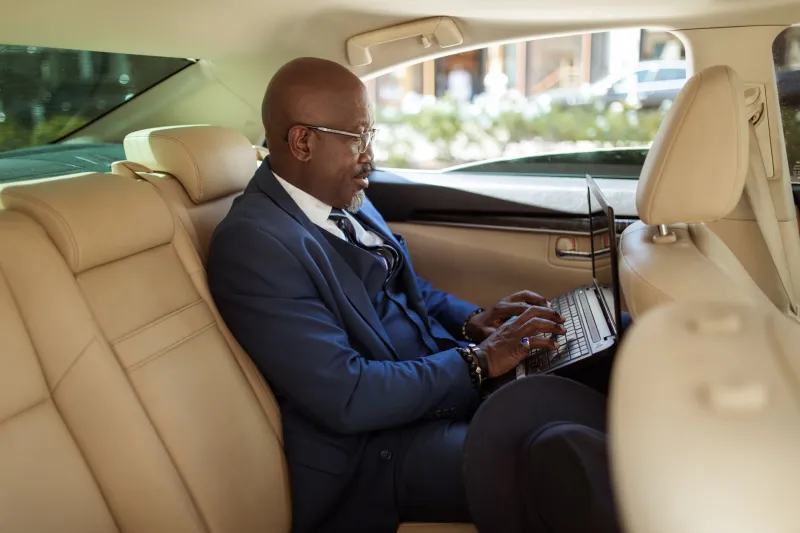
In practical terms, this means that the forty-five minutes an executive spends in a professionally chauffeured vehicle—seated in a quiet, climate-controlled cabin, free from the friction of traffic navigation, parking logistics, and the ambient stress of self-driving—is not merely comfortable. It is cognitively preparatory.
Arriving calm is not the same as arriving composed. Composure is earned through the deliberate management of pre-event conditions. A luxury chauffeur service removes the variables that erode it.
What the Other Side of the Table Observes
Negotiation is, at its core, a reading exercise. Each party is continuously assessing the other—for confidence, for urgency, for leverage. Long before the formal discussion opens, impressions are being formed.
A senior partner at a Chicago-based private equity firm described the dynamic plainly in an industry interview: "When I see a counterpart arrive flustered—checking their phone for parking, straightening their jacket in the elevator—I already know something about how they'll behave when the pressure increases. It tells me they didn't control their morning. That matters."
This is not superficial judgment. It reflects a well-documented aspect of negotiation psychology: perceived preparation signals perceived power. Executives who arrive with visible calm, unhurried and unencumbered, project readiness. That projection, whether consciously registered or not, shifts the interpersonal dynamics of the room.
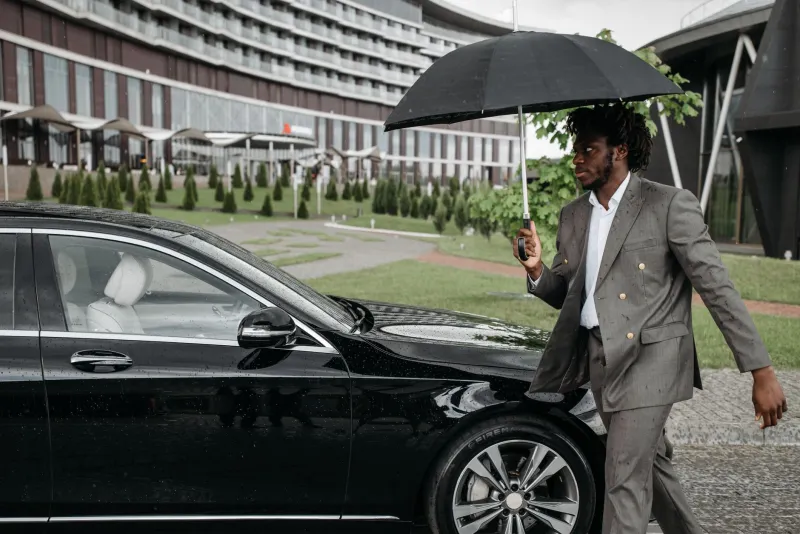
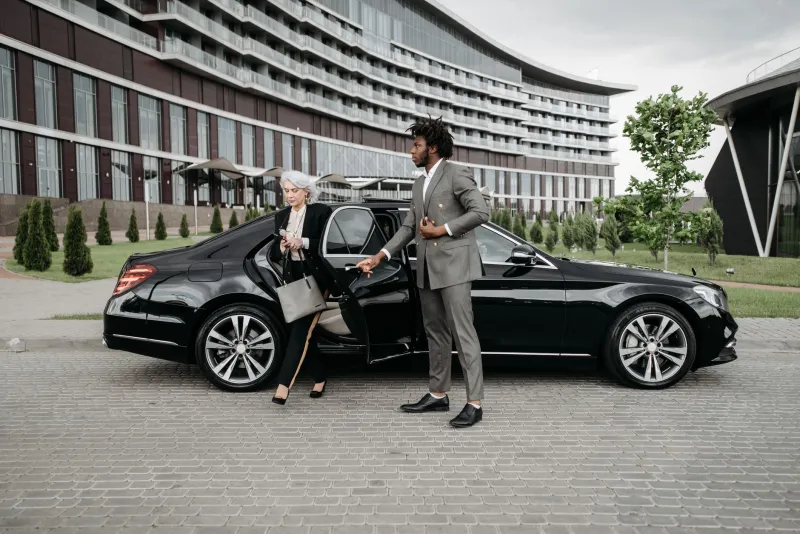
Arriving via a professional chauffeur service—stepping from a well-appointed vehicle at the building's entrance, belongings organized, mind uncluttered—communicates exactly that kind of deliberate readiness.
The Confidence Variable
Internal state matters as much as external signal. Research from Harvard Business School and Columbia University has explored the relationship between physical posture, environmental context, and negotiation performance. One consistent finding: individuals who feel a sense of elevated status prior to a high-stakes interaction are more likely to make assertive opening offers, hold their positions longer under pressure, and recover more effectively from setbacks during the negotiation arc.
Luxury transportation contributes to this internal architecture in several concrete ways. The absence of driving-related cognitive load—monitoring traffic, calculating routes, managing parking—preserves mental bandwidth for strategic thinking. The physical environment of a premium vehicle, with its refined materials, noise attenuation, and spatial comfort, creates a sensory baseline that reinforces a sense of authority rather than diminishing it.
For executives traveling from out of town—arriving via private aviation or commercial flight before proceeding directly to a negotiation—the transition from terminal to deal table is particularly consequential. A chauffeured car service that manages that transition seamlessly preserves the executive's mental state across a journey that might otherwise introduce significant friction.
Logistics as Leverage
There is also a purely operational dimension to this conversation that deserves direct attention.
Negotiations frequently pivot on timing. An executive who arrives late—even slightly—surrenders a measurable degree of psychological leverage. Lateness signals disorganization or, worse, disregard. Neither impression serves the deal.
Professional chauffeur services with sophisticated route monitoring and real-time traffic intelligence eliminate the uncertainty that makes punctuality a gamble. When an executive can trust that their ground transportation will deliver them precisely when and where they need to be, they can allocate their attention entirely to the work ahead.
Conversely, an executive who self-drives to a major negotiation in an unfamiliar city, struggles to locate parking, and arrives two minutes behind schedule has already made a concession—one that no amount of preparation can fully recover.
The Signal Sent to the Room
Beyond the individual executive, the choice of transportation sends a message to the entire opposing team. Deal-making in corporate America is intensely observational. Administrative staff, junior associates, and senior principals alike take note of how visiting parties present themselves. These observations feed into the informal assessments that shape how aggressively counterparts negotiate, how much flexibility they extend, and how seriously they take the relationship.
Arriving in a premium vehicle—not as a display of extravagance, but as a reflection of professional standards—communicates that you operate at a level where details are managed, not left to chance. It suggests an organization that values precision. In industries where trust and credibility are currencies, that signal has real worth.
Preparing the Mind for the Table
The most effective negotiators in American business share a common discipline: they treat the hours before a major discussion as part of the negotiation itself. They arrive with their thinking already organized, their emotional state already stable, their physical presence already composed.
Luxury ground transportation is not a luxury in the colloquial sense—an indulgence that exists for comfort alone. It is a performance tool. It creates the conditions under which an executive can do their best thinking, project their strongest presence, and walk into the room having already controlled every variable within reach.
At Ace Plus Luxury Car Service, we work with executives and corporate teams who understand that the deal begins long before the handshake. Our professional chauffeurs, premium fleet, and seamless logistics exist to ensure that when you arrive at the table, you arrive at your best—composed, confident, and ready to close.
Because in high-stakes negotiations, the advantage often goes to the person who prepared the most thoroughly. And preparation begins with how you spend the ride there.