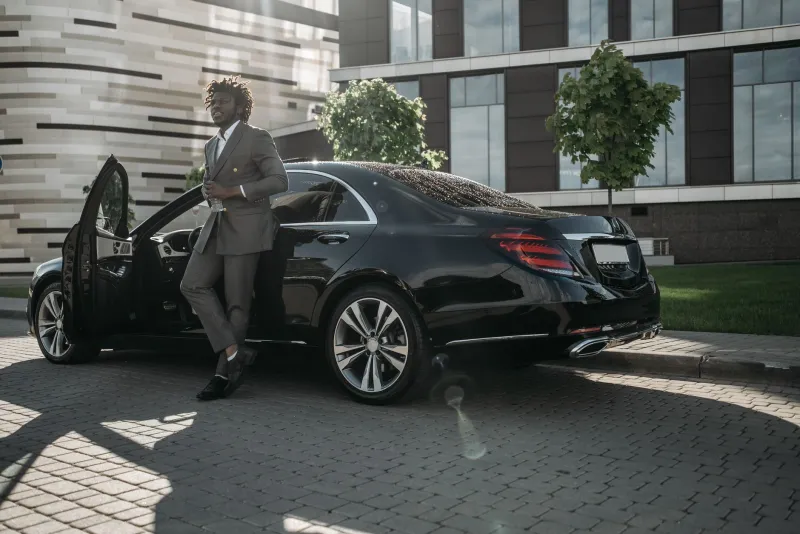
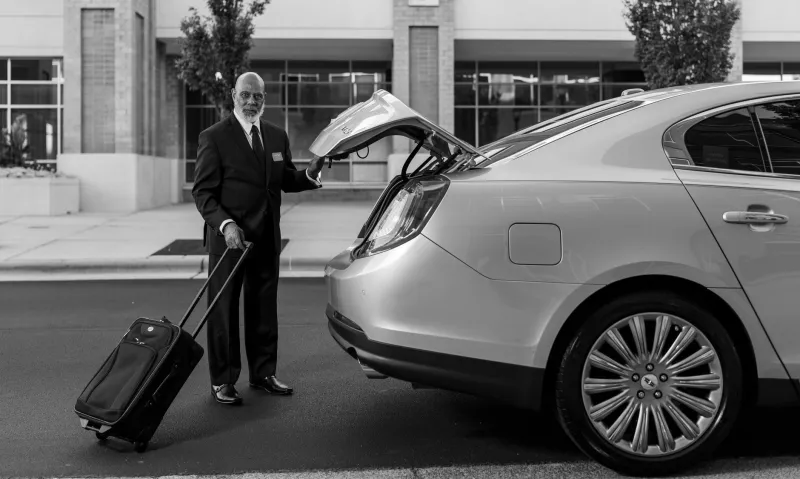
Neurons Under Siege: The Staggering Mental Price Executives Pay Behind the Wheel
There is a moment that many senior executives recognize, though few discuss openly. It arrives somewhere between the on-ramp and the parking garage — a fleeting awareness that the mind, which will soon be expected to negotiate a nine-figure contract or steer a company through a crisis, has just spent forty-five minutes managing lane changes, processing GPS instructions, and half-listening to a conference call. The question that follows is rarely asked with sufficient seriousness: What exactly did that commute cost me?
The answer, drawn from more than two decades of cognitive neuroscience research, is more alarming than most would expect.
The Myth of the Capable Multitasker
American business culture has long celebrated the ability to juggle competing demands simultaneously. The executive who fields calls while navigating traffic is often quietly admired — perceived as efficient, decisive, and in command. Neuroscience tells a different story entirely.
Research from the American Psychological Association and multiple university cognitive labs has consistently demonstrated that what humans perceive as multitasking is, in neurological terms, rapid task-switching — and every switch carries a measurable cost. The brain requires between 200 milliseconds and several seconds to fully reorient from one cognitive task to another. In a single forty-five-minute commute involving navigation, phone communication, and traffic management, an executive may perform hundreds of these switches. The cumulative effect is not efficiency. It is exhaustion.
Dr. David Strayer, a cognitive psychologist at the University of Utah whose research on driver distraction is among the most cited in the field, found that talking on a cell phone while driving — even hands-free — reduces the functional attention available for either task by roughly 37 percent. That is not 37 percent of driving attention. That is 37 percent of total cognitive capacity, redirected away from both tasks simultaneously.
For an executive preparing to walk into a pivotal meeting, 37 percent is not an acceptable margin of loss.
What a Single Text Message Actually Costs
The popular statistic — that reading a text while driving removes a driver's eyes from the road for an average of five seconds — has been used primarily as a safety warning. Its professional implications, however, deserve equal attention.
In those five seconds, a mind that should be consolidating the key arguments for an upcoming negotiation, reviewing the emotional dynamics of a client relationship, or mentally rehearsing an important presentation is instead decoding a message, formulating a response, and managing the physical and emotional interruption that the exchange creates. The disruption does not end when the phone is returned to the console.
Cognitive scientists refer to this as attention residue — a phenomenon documented extensively by Dr. Sophie Leroy at the University of Washington. When a task is interrupted before completion, the brain continues allocating a portion of its working memory to the unfinished item, even after the individual has ostensibly moved on. A text message answered in traffic does not simply consume five seconds. It occupies a fragment of executive bandwidth for minutes afterward, precisely during the window when that bandwidth is most needed.
Multiply this pattern across a daily commute, five days a week, fifty weeks a year, and the accumulated cognitive deficit becomes nearly impossible to quantify — though its consequences are not.
The Pivot: Executives Who Reclaimed Their Commute
The shift toward professional chauffeur services among senior executives is frequently framed as a matter of comfort or status. The more accurate framing is strategic.
Consider the profile of a managing partner at a private equity firm operating across three time zones. Prior to engaging a professional car service, his morning commute from a Connecticut suburb into Midtown Manhattan consumed approximately ninety minutes of reactive, fragmented cognitive effort. His own assessment: he arrived at the office having already made dozens of micro-decisions — route choices, conversational responses, navigation adjustments — none of which advanced his professional objectives in any meaningful way.
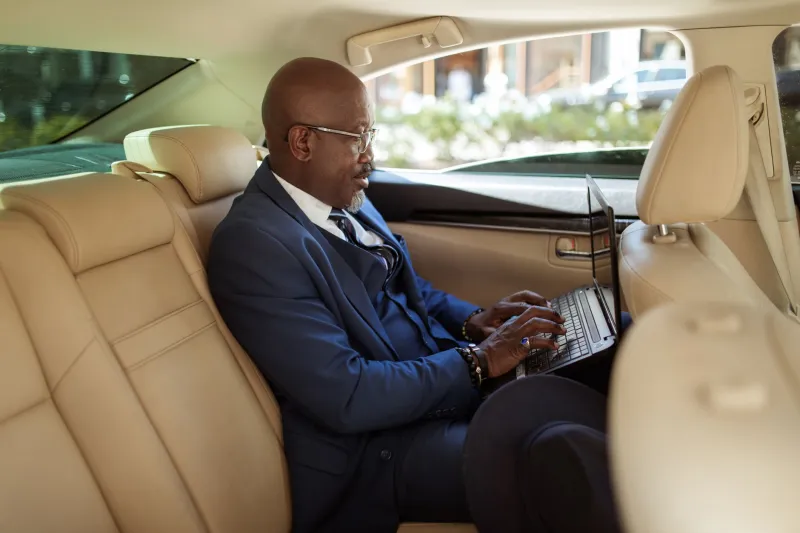
Within eight weeks of transitioning to a dedicated chauffeur arrangement, his commute time had not decreased. What changed was the quality of what occurred within it. Prepared briefings, reviewed the previous evening, were absorbed without interruption. Strategic calls were conducted with full attentional presence, not divided focus. On several occasions, he arrived at morning meetings having already mentally resolved the central problem on the agenda — a resolution that, in previous months, would have emerged only midway through the meeting itself, if at all.
This pattern is not anomalous. It reflects a fundamental reallocation of cognitive resources, from the logistics of physical transit to the intellectual demands of executive leadership.
The Compounding Return on Mental Clarity
The financial case for professional chauffeur service is most often made in terms of hourly billing rates or productivity metrics. These calculations, while valid, understate the actual return.
The more consequential variable is decision quality under cognitive load. Research in behavioral economics consistently demonstrates that decision-making deteriorates as mental fatigue accumulates. The executive who arrives at a negotiation having spent an hour managing traffic and fielding interruptions is not merely tired — they are operating with a measurably compromised capacity for risk assessment, creative problem-solving, and emotional regulation.
In high-stakes environments where a single well-framed question or a precisely timed concession can determine the outcome of a deal worth millions, the difference between an arrival state of peak cognitive readiness and one of accumulated fatigue is not incidental. It is determinative.
Arriving Ready, Not Merely On Time
At Ace Plus Luxury Car Service, the philosophy that shapes every engagement is deceptively simple: the journey to the meeting is part of the meeting. A professional chauffeur does not merely transport an executive from one address to another. The service creates the conditions under which that executive arrives as their most capable, composed, and strategically prepared self.
The vehicle is quiet. The route is managed. The logistics are invisible. And the mind — unencumbered by the neurological tax of divided attention — is free to do what it does best.
For the executive who has not yet asked what their commute is truly costing them, the answer may reframe every assumption they hold about how their most productive hours are spent.