When Tardiness Becomes a Liability: The Quiet Erosion of Executive Credibility Through Unreliable Transportation
There is a moment every executive dreads — the one where a phone screen shows three missed calls, a conference room full of waiting clients, and a navigation app recalculating through gridlock for the fourth time. It is not simply an inconvenience. In industries where trust is currency and perception is architecture, that moment can be the beginning of the end of a relationship that took years to cultivate.
Unreliable transportation is rarely discussed as a business risk. It does not appear on risk registers or quarterly reviews. Yet its consequences — lost deals, damaged reputations, eroded client confidence — are measurable, real, and frequently irreversible.
The First Signal Clients Receive Is Not Your Pitch
Long before a proposal is presented or a handshake exchanged, clients are already forming judgments. The sequence of a business meeting matters enormously. Who arrived first. Who kept whom waiting. Whether the person seeking the business demonstrated that they value the other party's time.
Consider a scenario familiar to many in the financial services and legal sectors: a senior partner scheduled to close a multi-million-dollar advisory contract arrives twelve minutes late to a breakfast meeting in Midtown Manhattan. The delay, caused by an unreliable rideshare pickup and unexpected lane closures, is brief by most standards. Yet the prospective client — a CEO accustomed to operating with precision — has already recalibrated her assessment. The meeting proceeds, but the energy has shifted. The contract ultimately goes to a competing firm whose principal arrived early, composed, and prepared.
Twelve minutes. A relationship worth seven figures.
This is not an isolated anecdote. It is a pattern that repeats across industries — from commercial real estate to private equity to high-end consulting — wherever the caliber of the professional is expected to be reflected in every dimension of their conduct.
Chronic Lateness and the Compound Effect on Deal Flow
A single late arrival might be forgiven. Chronic transportation uncertainty, however, creates something far more damaging: a reputation for unreliability that spreads quietly through professional networks.
In major American business markets — New York, Los Angeles, Chicago, Houston, Miami — word travels fast among decision-makers. Referrals, which remain the lifeblood of high-value professional services, are built on a foundation of confidence. When that confidence is undermined by repeated arrival failures, the referral pipeline narrows. Clients who might otherwise champion your services to their networks begin to hedge their endorsements.
The mathematics of deal flow are unforgiving. If a single unreliable transportation incident costs one referral, and each referral represents a potential client worth a defined revenue figure, the cumulative cost of transportation uncertainty over the course of a year can dwarf the annual expense of a premium car service many times over.
The irony is that executives who cite cost as a reason to rely on inconsistent transportation options are frequently absorbing far greater costs in the form of missed opportunities they never see clearly enough to quantify.
What Reliable Arrival Actually Communicates
The inverse of transportation failure is not simply punctuality. It is the deliberate signal that arrives with a professional who appears on schedule, unhurried, and in command of their environment.
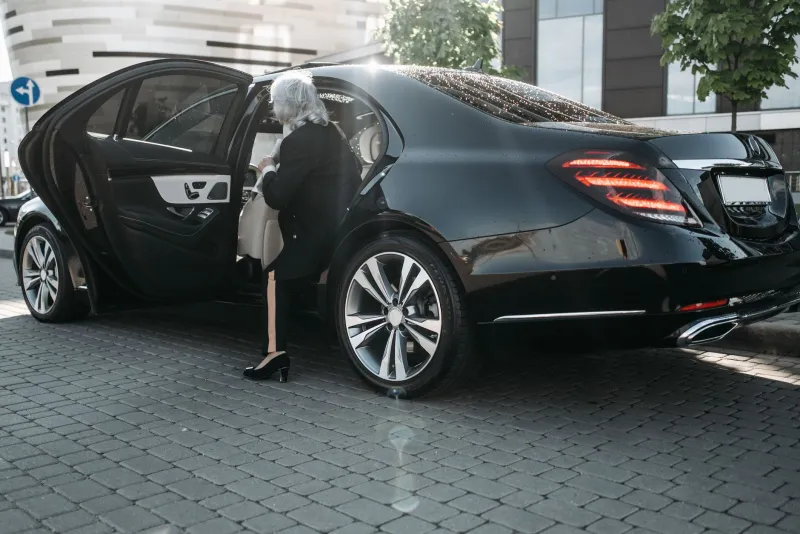
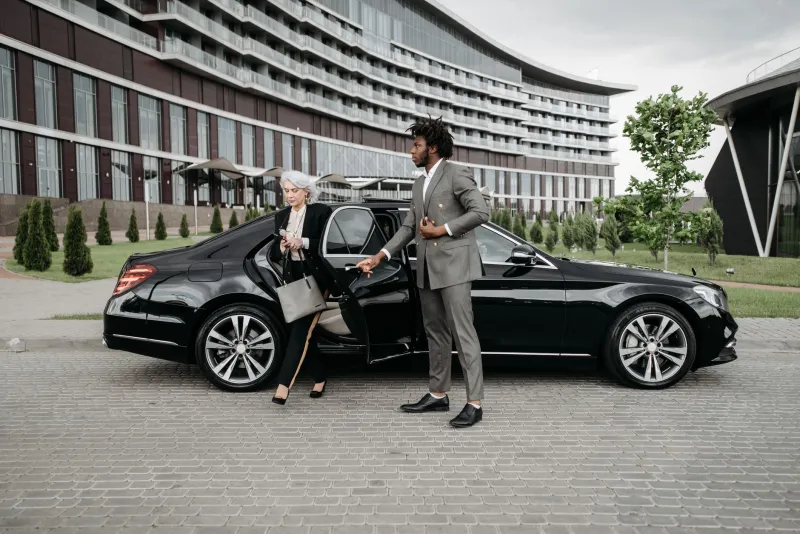
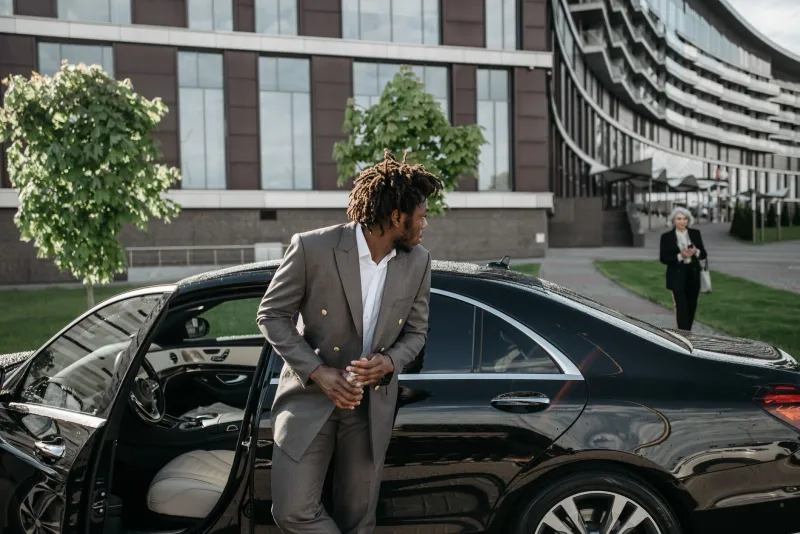
When an executive steps from a well-appointed vehicle — having used transit time for preparation rather than navigation anxiety — they enter the room differently. There is no residual stress from a parking search. No distraction from a difficult driver or a delayed pickup. The mental bandwidth that would otherwise be consumed by logistical friction is available for the meeting itself.
Clients notice this. They may not articulate it consciously, but they register the composure of someone who has clearly managed their day with intention. That composure translates directly into perceived competence and trustworthiness — two qualities that are foundational to closing high-value engagements.
Professional chauffeur services, particularly those operating at the premium tier, are engineered to produce exactly this outcome. Route intelligence, pre-arrival confirmations, vehicle readiness, and experienced drivers who understand the demands of executive schedules combine to eliminate the variables that make transportation unreliable in the first place.
The Reputation Architecture of Consistent Excellence
In the context of executive reputation, transportation choices are a form of brand management. Every touchpoint in a client relationship either reinforces or undermines the narrative a professional is constructing about who they are and how they operate.
Arriving in a premium vehicle, on time, with the kind of quiet professionalism that signals both success and discipline, reinforces a narrative of excellence. It communicates that this individual manages their affairs with care — and by extension, that they will manage a client's affairs with the same standard.
This is not superficiality. It is the practical reality of how trust is built in environments where stakes are high and margins for error are narrow. The professionals who rise to the upper tier of their fields understand that reputation is constructed from accumulated details, and that no detail is truly small when a client is watching.
Conversely, the executive who arrives frazzled, apologetic, and carrying the visible residue of a transportation disaster has already spent credibility they may not have enough of to spend.
Rethinking Transportation as a Strategic Asset
The shift in perspective required here is straightforward but significant: transportation is not a logistics function. It is a professional investment with measurable returns in reputation, client perception, and deal conversion.
For executives operating in markets where the difference between winning and losing a client comes down to confidence and chemistry, the reliability of their arrival is not a peripheral concern. It is central to their competitive positioning.
Premium car services such as Ace Plus Luxury Car Service exist precisely to absorb this risk — to ensure that the variables outside an executive's control are managed by professionals whose singular focus is seamless, punctual, and discreet transportation. The result is not merely convenience. It is the freedom to arrive as the best version of yourself, every time, regardless of what the city's traffic patterns have in store.
The Cost of Underestimating Arrival
Business culture in the United States places enormous emphasis on preparation, presentation, and performance. Yet a surprising number of high-performing professionals leave one of the most visible elements of their professional presentation — how they arrive — to chance.
The cost of that gamble is rarely visible in a single transaction. It accumulates over time, in relationships that never quite solidified, in referrals that never materialized, in rooms where the energy was slightly off from the moment the meeting began.
Reliable, premium transportation does not guarantee success in any given meeting. But it eliminates a category of failure that no amount of preparation, polish, or pitch quality can fully compensate for. In high-stakes business, that elimination is worth considerably more than it costs.
The executives who understand this arrive early, arrive composed, and arrive with the quiet confidence of professionals who have removed uncertainty from the equation. That is not a small advantage. In a competitive landscape where every signal matters, it may be the most consequential one of all.