Before You Speak a Word: The Strategic Signal Sent by Your Arrival Vehicle
In American boardrooms and corner offices, seasoned executives understand a fundamental truth: perception is currency. The way a professional enters a room — or, more precisely, how they arrive before entering it — carries weight that few openly discuss but nearly everyone instinctively registers. Luxury transportation has evolved well beyond a marker of personal indulgence. For C-suite leaders, senior partners, and high-performing sales professionals, a premium car service has become a precisely calibrated instrument of influence.
The Psychology of the First Impression
Research in social psychology consistently demonstrates that human beings form lasting judgments within the first few seconds of an encounter. These snap assessments — rooted in evolutionary pattern recognition — are notoriously resistant to revision. What many professionals fail to appreciate is that this evaluation process begins not at the conference table, but in the parking structure, the hotel drop-off, or the curb outside a client's headquarters.
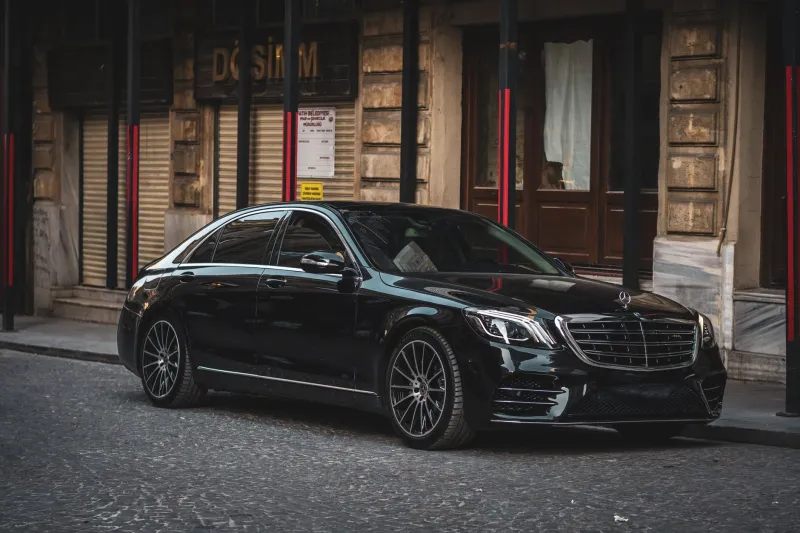
Arriving in a polished, late-model luxury sedan driven by a uniformed chauffeur communicates a cluster of attributes simultaneously: financial stability, attention to detail, respect for the meeting itself, and a command of one's environment. It signals that this is someone who manages their affairs with precision — and by extension, someone whose professional judgment can be trusted.
Conversely, the executive who arrives flustered from navigating unfamiliar streets, circling for parking, or stepping out of a rideshare with luggage in tow broadcasts a different story entirely — one of improvisation rather than intention.
When Transportation Becomes a Negotiating Asset
Consider the dynamics of a high-value merger discussion or a competitive pitch for a major account. Every touchpoint in that process contributes to the client's cumulative impression of a firm's capabilities. Transportation is one of those touchpoints — and a surprisingly influential one.
A regional managing director at a Chicago-based financial advisory firm recounted arranging luxury car service not only for himself but for his visiting client prospects during a multi-day due diligence visit. Rather than leaving clients to navigate an unfamiliar city independently, he coordinated seamless airport pickups, hotel transfers, and dinner arrivals through a single premium provider. The result, he noted, was that clients entered every meeting relaxed, punctual, and already experiencing the firm's commitment to service before a single presentation slide had been shown.
"They told us afterward that the trip itself felt like a preview of what working with us would be like," he reflected. "That's exactly what we intended."
This principle — using the logistics of a visit to demonstrate operational excellence — is increasingly common among firms competing for enterprise contracts where perceived cultural fit matters as much as technical competence.
The ROI Case That CFOs Are Quietly Acknowledging
For years, luxury transportation appeared as a line item that finance departments scrutinized with skepticism. The question was straightforward: why pay a premium for transportation when functional alternatives exist?
That calculus is shifting. When organizations begin mapping transportation costs against deal conversion rates, executive productivity, and client retention metrics, the numbers tell a more nuanced story.
A 2023 survey of senior executives across industries in the United States found that nearly 68 percent of respondents considered professional appearance and logistics management to be "significant" or "highly significant" factors when evaluating prospective partners or vendors. Firms that consistently deliver polished, frictionless experiences — including transportation — reported measurably higher rates of repeat business and referral activity.
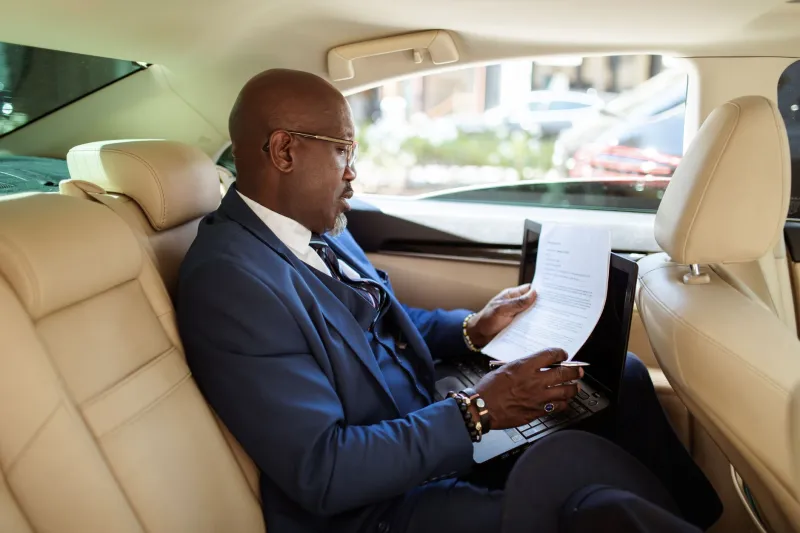
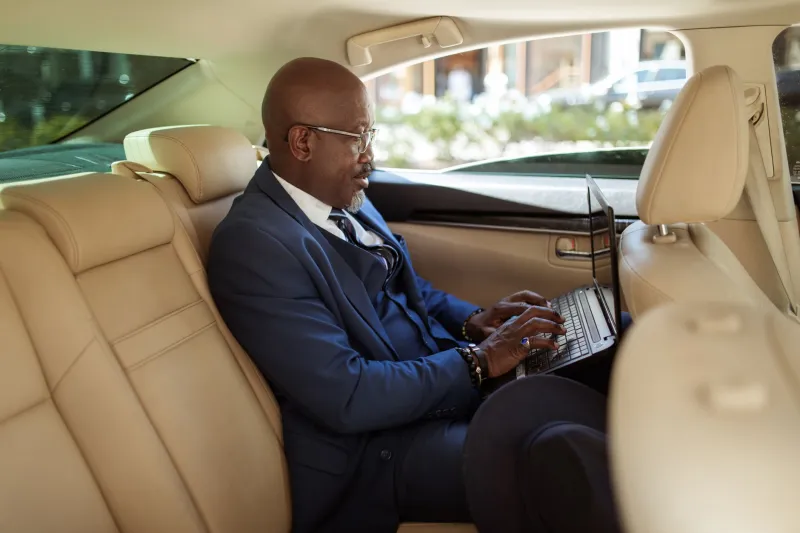
Beyond client-facing scenarios, the productivity argument is compelling on its own. An executive who spends 90 minutes in the back of a chauffeured vehicle — reviewing briefing documents, preparing remarks, conducting calls — arrives not only composed but substantively better prepared than a counterpart who spent the same window behind the wheel in traffic. The vehicle, in this context, functions as a mobile office. The time recaptured across a calendar year translates into measurable strategic output.
Chauffeur Service as a Career Advancement Signal
Beyond individual deals, luxury transportation choices carry implications for how professionals are perceived within their own organizations. In sectors where image management is woven into the professional culture — law, investment banking, consulting, real estate development — the deliberate use of premium car service communicates ambition, self-awareness, and an understanding of how high-performance environments operate.
A senior partner at a New York law firm described the unspoken culture around transportation among his colleagues: "At a certain level, you're expected to manage your presence. That includes how you show up. It's not vanity — it's professionalism taken seriously."
For rising professionals looking to accelerate their trajectory, adopting the habits of the level above them — including transportation choices — has long been recognized as a form of aspirational positioning. It is not about mimicry; it is about demonstrating readiness.
The Compound Effect of Consistent Presentation
What distinguishes the most strategically sophisticated professionals is not a single dramatic gesture but the consistency of their presentation across time. Using luxury car service for one high-profile pitch and reverting to improvised alternatives for routine client meetings creates an inconsistency that attentive clients and colleagues notice.
The executives who extract the greatest value from premium transportation do so by integrating it as a standard operating procedure — for airport transfers, client entertainment, board meetings, and keynote appearances alike. This consistency reinforces a brand identity that extends beyond the office walls.
At Ace Plus Luxury Car Service, we work with business professionals who understand that every detail of their public presentation is a data point in how they are evaluated. Our fleet of meticulously maintained vehicles, paired with professional chauffeurs trained in discretion and punctuality, exists precisely to support that standard.
Arriving as a Statement of Intent
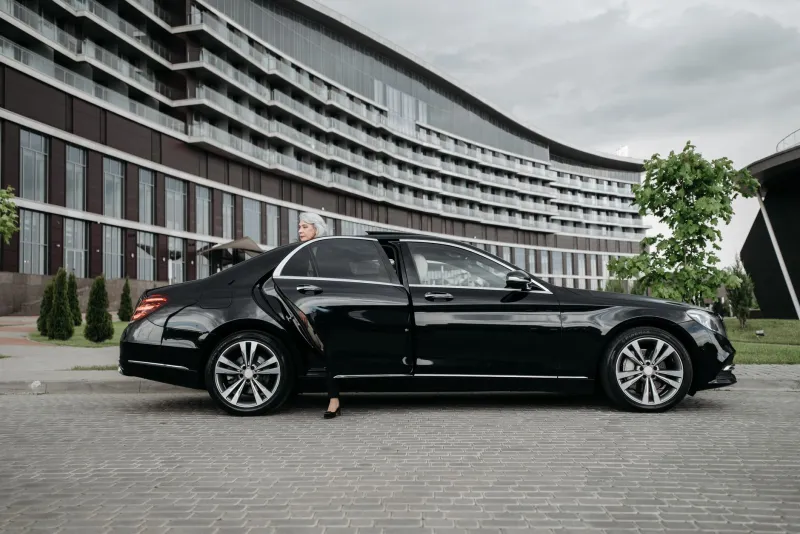
The boardroom negotiation begins earlier than most professionals acknowledge. It begins when a car pulls to the curb, when a door opens with quiet authority, and when an executive steps out — unhurried, prepared, and entirely composed.
In a business landscape where differentiation is increasingly difficult to achieve through product or price alone, the manner in which a professional moves through the world has become a meaningful competitive variable. Luxury transportation, chosen deliberately and used consistently, is not an expense to be justified. It is an investment in the perception that makes everything else possible.
For those who intend to compete at the highest level, the question is no longer whether premium car service is worth the cost. The question is whether they can afford to arrive any other way.